Explore our free online and in-person training and events.

For family or friends who step up to raise a child.
Are you a kinship carer in Blackpool, Rochdale, Newham or Oxfordshire? Join a groundbreaking research trial for kinship carers in England.

Click on the link below to take you to the section you'd like to read:
Before you fill in any forms, please read more about the research trial and what it means for you in this easy read guide.
This has been developed by the Centre for Evidence and Implementation (CEI) and Ipsos UK. These are the independent evaluators for the research trial.
The document gives you more information about what information we will collect as part of the Kinship Connected pilot trial. It is really important that you have time to understand what information will be collected and how it will be shared and stored.
This is a 2-step process. Registering your interest here is the first step. Here’s how it works:
Step 1
Fill in the expression of interest form below.
It takes around 5 minutes. We’ll use it to check you’re eligible and to get in touch with you.
Step 2
After you’ve filled in the expression of interest form, we’ll send you an email with a link to the full application form.
This takes around 15–20 minutes to complete. It includes your consent to take part in the research trial and some questions about your experience as a kinship carer.
You’ll have 72 hours to complete the second form. We’ll send you a reminder after 48 hours if you haven’t finished it yet.
If you need help completing it, just reply to the email and we’ll arrange for someone to go through it with you.
Why this is a 2-step process to apply?
Because this is a research trial, we have a responsibility to make sure you have all the information you need before you decide to take part. We can’t ask you to make that decision before you’ve had a chance to read everything properly.
So Step 1 is just your basic details. Step 2 is when you find out everything and decide whether it’s right for you.
What happens after you’ve completed the 2 steps?
Once we have your completed second form, your application will be passed to our independent research team. Using a computer generator, they will randomly assign you to 1 of 2 groups:
You’ll hear back from us within 5 working days to let you know which group you’re in.
If you haven’t been allocated to start straight away, don’t worry you can still access all of Kinship’s other services for free.
Sarah is a kinship carer who took part in Kinship Connected. She describes her experience and what it feels like to be supported by a Kinship Navigator. Sarah is now a Kinship staff member and Kinship Navigator herself.
Kinship Connected is our intensive support programme for kinship carers. It’s designed to improve your wellbeing, build your resilience, and help your kinship family feel more stable.
A Kinship Navigator will work with you for up to 6 months. They’ll meet you at home and in your community. They’ll help you find local services and support and guide you through complex local systems so you don’t have to do it alone.
A Kinship Navigator is a trained member of Kinship staff. They’re not part of your local authority, they’re independent. But they often work alongside local authority teams in places like Family Hubs.
Your Kinship Navigator will:
Your Kinship Navigator will support you for up to 6 months. They’ll agree a plan with you at the start, based on what you and your family need. You will work on it together.
Kinship Connected is open to all kinship carers regardless of your legal order or how long you’ve been a kinship carer.
The only exception is Kinship Foster Carers or Kinship Connected Carers who already receive support from the local authority.
Kinship Navigators come from a wide range of professional backgrounds. This includes social work, benefits and finance, education, legal services, and therapeutic support among others.
All Kinship Navigators are trained to understand kinship care. They understand the challenges you face and approach their work with empathy and a trauma-informed practice.
Some of our Kinship Navigators are kinship carers themselves, or have been in the past. We actively encourage lived experience in these roles.
Around 1 in 3 of our Kinship Navigators have lived experience of kinship care. We think that matters and we’re proud of it.
Your Kinship Navigator will work with you 1-to-1. The support they give you will be based on your situation and your goals, so it will look different for every kinship carer.
On average, you can expect at least 3 to 4 in-person meetings and at least 4 to 6 phone or video call sessions over the 6 months. But this depends on what you need. It could be more, or it could be less.
Your Kinship Navigator can help you with a wide range of things, including:
When you take part in the programme, you’ll also receive a free copy of the Kinship Care Guide for England. This is a practical guide to help you understand your rights and what support is available to you.
At 3 months, your Kinship Navigator will check in with you to review your goals and adjust the support if your needs have changed. At 6 months, you’ll have a final review together to celebrate what you’ve achieved and make sure you know where to go next.
You don’t have to take up every part of the programme but we do ask you to complete the 6 month programme. All elements are voluntary including peer support groups.
It will be important to be able to demonstrate that the programme works.
Ideally yes. This is the first research trial of it’s kind for kinship carers. We want to make the case that all kinship carers in England should be able to access Kinship Connected.
We understand that situations do change, so if you do join the programme, you can talk to your Kinship Navigator about any changes needed in your support.
You can withdrawal from the programme and trial at any point.
A social worker works for your local authority. They have a statutory role, which means they have legal duties and powers. This can include making decisions about children’s welfare, carrying out assessments, and applying for legal orders.
A Kinship Navigator is completely independent from your local authority. They work for Kinship, a national charity. They have no legal powers and play no part in decisions about the child in your care.
However like all organisations that work with children and families, Kinship has a duty to act if we believe a child is at risk of harm. If your Kinship Navigator has a safeguarding concern, they may need to share information with the relevant people to keep a child safe. Your Kinship Navigator will always be open with you about this. They will follow Kinship’s safeguarding policy.
A pilot is a small-scale test of a programme before it’s rolled out more widely. We’re running a pilot to check that Kinship Connected works well in practice and reaches the kinship carers who need it most.
A randomised controlled trial (RCT) is a way of testing whether a programme really works. You compare 2 similar groups – 1 gets the programme, 1 doesn’t – and look at whether there’s a clear difference.
To make sure the comparison is fair, researchers use randomisation. Think of it like flipping a coin – it decides which group each kinship carer goes into. This removes bias and gives the strongest possible evidence about whether the programme made a real difference.
RCTs are used in children’s services because they help government and funders understand what genuinely improves outcomes for families.
A pilot RCT is a smaller test to check whether running a full RCT is possible. It focuses on whether the processes work. It helps us answer questions like:
Kinship is running the pilot, and we’ve been matched with independent evaluators called CEI and Ipsos.
They understand kinship care in the UK. Their job is to understand how well the pilot works and what we need to improve before a full RCT can happen. They’re here to learn with us, not to judge us.
The pilot is funded by Foundations who are in turn funded by the Department for Education. They have no influence over how the research is carried out or what the findings show.
The evaluation is run independently by CEI and Ipsos, which means the results will be published transparently, whatever they show.
We started working on the reserach trial in December 2025. The pilot runs over 18 months until August 2027.
Delivery for kinship carers starts in June 2026 and will finish at the end of July 2027
Yes. The trial is approved by an ethics committee and an advisory panel that includes kinship carers. Their views are central to how we’ve designed the pilot and how we’ll measure whether it works.
Kinship Connected was developed in 2013 based on what kinship carers told us we needed.
We know this is one of the hardest parts of asking kinship carers to take part in a trial and we want to be honest about it.
This pilot uses a waitlist design. That means some kinship carers receive Kinship Connected straight away, and others join a waitlist for 6 months before they receive the programme.
This isn’t because 1 group is more deserving than another. It’s simply how researchers make sure the trial is fair and balanced, so we can show whether the programme genuinely works.
We’re also looking at keeping the time between referral and starting the programme as short as possible.
Every kinship carer who takes part will receive Kinship Connected.
The timing is just different because of how the trial works. And over 12 months of delivery, all kinship carers in the trial will get the support.
We want to make sure language is never a barrier to taking part. If English is not your first language, please let us know if or when you decide to take part.
We can arrange an interpreter through your local authority and we have materials available in other languages.
There are 2 ways to access Kinship Connected during the pilot.
Both routes use an online form that asks for some key information about you and your situation.
You will need to complete these to take part.
If you apply, a computer will randomly put you into one of two groups:
As part of your referral onto the trial, Kinship will ask you to complete a form. The research trial team will use some of this information to help us understand who is accessing Kinship Connected. This will include:
For the trial, we will collect information in 4 ways. This includes:
We’ll ask you to complete a form as part of your referral onto the trial. Six months later, you’ll be asked you fill it in again.
You will receive a £20 voucher for completing the first form. Kinship carers who wait 6 months to start Kinship Connected will receive another £20 voucher for completing the follow‑up form.
We’ll start to open up to referrals from the week beginning Monday 15 June 2026.
It will be a 2-step process even if you refer yourself, or your local authority refers you.
Explore our free online and in-person training and events.
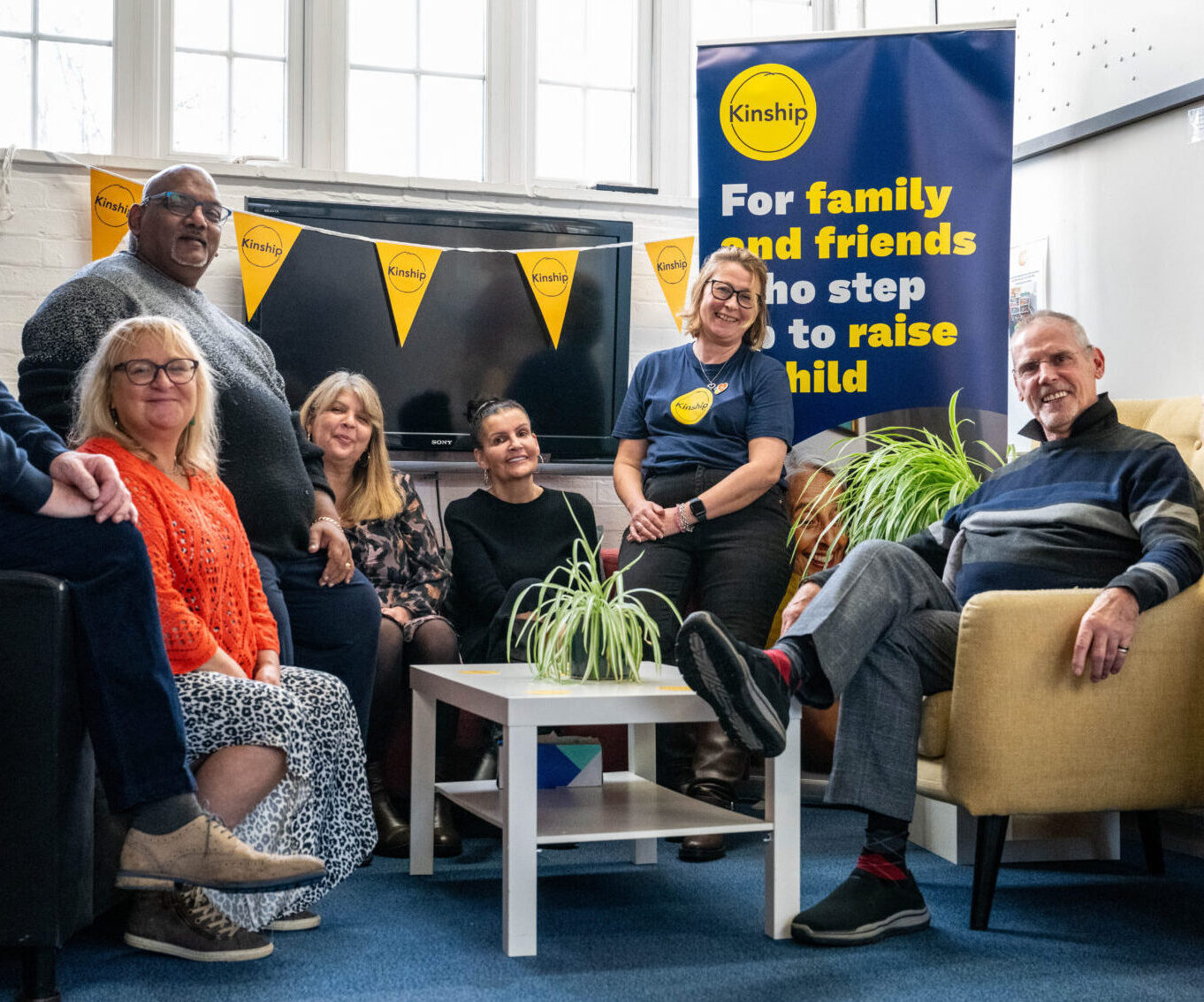
Sign up using the form below and we’ll keep you up to date with the information that’s important to you.

Independent information, support and advice for you. Because, we know kinship care is complex and confusing. Use Kinship Compass to discover what support is available to you, both locally and nationally, to help you navigate your kinship journey.
Sign up for emails to keep up to date with the information that’s important to you, from support and advice for kinship carers, to our latest news, events and campaigns.